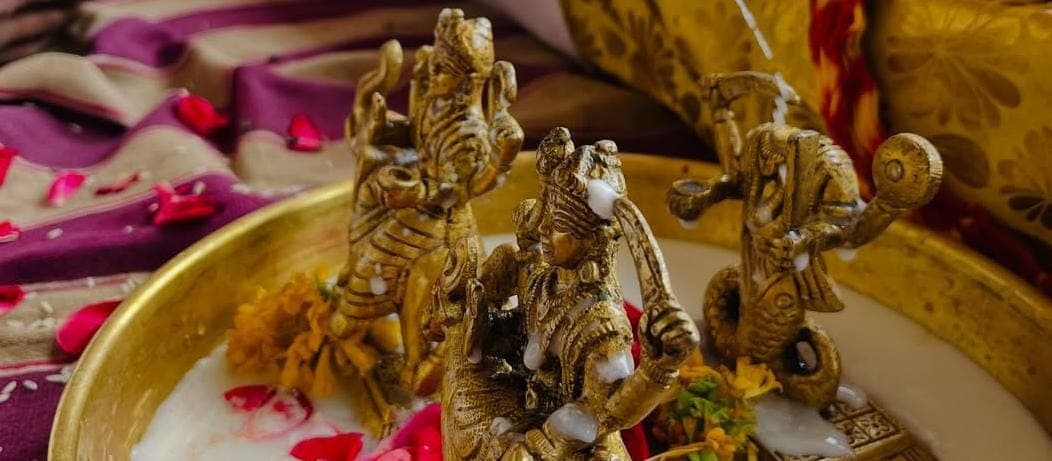
Overview
Navgraha Shanti addresses the nine celestial bodies of Vedic astrology — Surya, Chandra, Mangal, Budh, Guru, Shukra, Shani, Rahu and Ketu — through structured worship and havan, aimed at restoring overall balance rather than targeting a single dosha.
Religious Importance
Each graha is worshipped with its associated deity, colour, flower and grain, drawing on a tradition that treats planetary influence as something that can be eased through devotion and disciplined ritual.
Who Should Perform This Ritual
Recommended when multiple planets are shown to be afflicted in a chart, or as a general annual worship for overall stability, health and prosperity.
Benefits
- Aims to bring balance across career, health and relationships
- A comprehensive alternative to single-planet remedies
- Often performed annually as preventive worship
- Supports mental clarity during major life transitions
When Should It Be Performed
Can be performed on most days after checking the panchang; many families prefer it around their birthday or the start of a new year.
Detailed Procedure
- 1
Kalash sthapana
A sacred vessel is set up representing the presiding deities.
- 2
Navgraha mandal pujan
Each of the nine planetary deities is worshipped in sequence with its designated offerings.
- 3
Havan
Ahutis are offered for each graha with its associated mantra and materials.
- 4
Aarti
A concluding aarti is performed for all nine deities together.
- 5
Prasad and guidance
Prasad is distributed and any simple daily observances are shared.
Required Samagri
We arrange all required samagri as part of our service — this list is shared for your reference.
Frequently Asked Questions
Yes — this addresses overall planetary balance rather than one specific placement, and we'll help you decide which is more relevant after reviewing your chart.
Ready to arrange your navgraha shanti puja?
Speak with our team to confirm the right priest, timing and pricing.